Author Archives: manyfesto

east flatbush

Sixteen year-old Kimani Gray was murdered last Sunday, shot 11 times by two undercover police officers. The police claimed that Gray was armed and threatening them with deadly force. Neighbors say they heard him plead for his life. Eleven times is a lot of times to shoot somebody.

Accordingly, East Flatbush has exploded with anger. There might be plenty who just hang from their windows, or wave from the doorways, but the idea that a group of vulnerable young people – the most targeted members of this neighborhood – would go through the streets articulating some serious rage means that it’s already boiled over. There have been nearly 50 arrests so far, and the protests continue.

Despite the majority of the media coverage and spin to this is that it’s the case of a bunch of outsiders there to do damage, there are people from all walks of life at this protest. True, many travel from different parts of New York, but they travel from the Bronx. They travel from Harlem. They travel over an hour by train or longer by bus to get there and hold solidarity with East Flatbush. There are white people and there are Hispanics, students and the unemployed, the formerly incarcerated and those who have never been touched by a cop. There are still more from the neighborhood. Everyone is furious.

The NYPD killed 21 people last year. They have dragged unarmed young women into the streets by their hair and killed them. Even if there are a million excuses and reasons, dismissed hearings and slaps on the wrist, these children gunned down in East Flatbush were murdered. They were murdered from the moment they were born. By chance of birth they were born into a system that condemned them to death or jail – sometimes both. The young men of East Flatbush are regularly stopped on the street and frisked by the NYPD. The parents are tired of losing their children – either to death or to lost opportunity.

For sure, I spoke with a man on the subway tonight who told me he was without power for a month after the hurricane. His life was swept away from him on the Far Rockaways by Sandy. Bloomberg showed his face there and was heckled away by the crowd. It was sort of a joke when Manhattan was without power – people moved uptown and checked into hotels or went to stay with friends. It was an inconvienance at best. But in the Far Rockaways people’s whole lives were wrecked by a Category 1 hurricane, which is not a very powerful hurricane. The foundations their lives were built on were those of poverty.

It is the same in East Flatbush. I’ve had people tell me that you need at least $40,000 to live a year in this city, but there are those in places like these that live off of $9,000 a year. The disconnect is remarkable.

So for the time being, rage builds in East Flatbush. The police presence is overwhelming. They won’t let the crowd to within a block of the police precinct and have cops on horseback. They have arrested nearly 50 people thus far and they are serious about cracking down. Kimani Gray’s sister was arrested for crossing the street. In response, the cops are going to the hospital with wounds from thrown bricks and bottles. The stakes are rising.

Kimani Gray’s family asked for there to be no protesting two days after they lost their son. The protesters proceeded. To the organizers, this was not just about Kimani Gray. It was about the structures that brutally oppress them. It is and isn’t about the cops – for sure, they are responsible for the shooting more directly, but they representative of what protects the system that keeps people in Red Hook and the Far Rockaways without power a month after the storm has passed. The system that creates teen mothers and the system that kills and imprisons their children. The system that has 1.8 million New Yorkers on food stamps and 21,000 children homeless. People came from all over New York because they are tired of it. They are calling for the end of it in the streets of East Flatbush. They are protesting against racism, brutality, capitalism, poverty and the senseless killing of children.

link roundup

Corbin Hiar gets offered his very own safari from a shadowy member of the ICCF while tracking down corruption in Washington, with some insight into the agenda in the developing world:

You realize that it’s their very culture, it’s the history of their peoples that’s at risk in the modern era where there are not a lot of solutions, and where a lot of organizations think the answer is to remove the people. Where the answer really is to include the people. Where the answer is to release the marketplace. Where, if these people rather than competing with these animals can live complimentarily—and I mean to benefit from them. That the value of these natural resources can be unleashed so that it benefits them.

Can you believe the culture once saw police as friendly neighborhood cops? Michael Arria interviews Radley Balko (whadda power name!) on the militarization of police in the United States. 

Good news comrades! All that personal data you’re offering up online can be used to predict if you are a drug addict or a child of a broken home. Welcome to the greatest job interview of your future life:

As ProPublica‘s Lois Beckett explains, data brokers sell information about everything from “whether you’re pregnant or divorced or trying to lose weight.” If you just read 18 wedding announcements on the New York Timessite, for example, Facebook knows that—but you might not know that until the engagement ring advertisements start popping up on your Facebook profile page.

San Francisco rolls out their new tribute to free speech: Pam Geller’s venomous ad campaign against Muslims reaches a new fever pitch as the ads claim that Muslims consider killing Jews as a pious act. Of course, the city, not wanting to make their coffers dirty with blood money, considerately donate the proceeds to a completely unrelated campaign.

new labor and new journalism

A fascinating find is going around on tumblr as a response to Nate Thayer’s justified takedown of the exploitative and exclusionary world of journalism. My mother quit journalism when she started to sense it was turning into something less of a public service and vital part of civil life and more of a money-making venture. For sure, someone has always made good money off of journalism, whether it’s a state run or a private venture, but journalists were paid as well. Now that the great labor squeeze has hit the papers, seasoned journalists like Nate Thayer, who does great work and has for many years, are suddenly competing with young upstarts who are willing to do the work for free, or perhaps re-purpose someone else’s. While the pros might accuse the new kids of engaging in scab behavior – they are in a way – both are exploited and both end up losing out in the end. Even the publications that come out in support for Nate admit they publish work they got for free and employ part-time temps (like myself).

As more professional journalists find their living in new concepts like “content marketing” (the magazine I temp for has recently added three to the roster) and more are willing to write for less, the quality of journalism degrades and the democratizing promises of the internet instead further pools the power and income at the top – where it has always gone – while culling smaller and more diverse magazines and newspapers.  The message gets more reverberation, and the origin of the content becomes more obfuscated. Mix that around with some pay-for-play schemes at already established papers, and our version of truth becomes more watered down, more unknowable.

Meanwhile, labor is further fractured and sent scrambling for crumbs. Few who are not endowed with a trust fund paycheck can afford to go do the legwork needed to really dig into a story. What is journalistic integrity? Even the piece that Nate Thayer was arguing about with The Atlantic was originally sold to NKNews, a news site on North Korea that is incredibly opaque itself (the editor board is not listed, nor their source of income) and has possible links to LiNK, a non profit dedicated to introducing “Liberty” to North Korea, among other organizations based in Washington D.C.

It seems I got a little sidetracked. The link I quoted at the beginning is a story from 1999 exploring the new labor economy based on the internet, of which journalism is now part and parcel. Entitled “Why Your Fabulous Job Sucks” it sort of illustrates how this generation got duped into low paying jobs that have little to no chance of unionization for the promise of a “pick your own hours” kind of lifestyle. Of course, no one told us that if we don’t “pick” to work all of them, we get none of them. The promise of freelance – “be your own boss!” – becomes a struggle to undercut the unseen competition, even if that means writing for free.

I was offered journalism jobs when I was living in Palestine – all of them were for no pay and all of them promised me a great opportunity to get exposure and build a portfolio. I never took one of them, something I sometimes regret as I sit where I am. Yet – what would I have been buying into? It’s nice to think of yourself as the next Seymour Hersh, but if you ever want to make money by writing, you’re better off going into content marketing or shilling for the big boys more directly over twitter.

I write what I do for free because I feel I have to. Oh, and the “feed me” button is located here.

Forced Draft Urbanization

To follow my earlier post on the geography of de-sovietization and modernisation it’s worth pointing to a 1968 paper by Samuel Huntington  on the Vietnam war, entitled “The Bases of Accommodation”, where he outlines his plan for what he calls “forced draft urbanization”. This equates to forcing – either by war or economic means – rural populations into urban centers, this traumatic dislocation allowing for easier surveillance and indoctrination to occupation values and goals. As he writes:

In an absent-minded way the United States in Viet Nam  may well have stumbled upon the answer to “wars of national  liberation.” The effective response lies neither in the quest for  conventional military victory nor in the esoteric doctrines and  gimmicks of counter-insurgency warfare. It is instead forced  draft urbanization and modernization which rapidly brings the  country in question out of the phase in which a rural revolutionary movement can hope to generate sufficient strength to come to power.

on open borders

A new piece by   for the Jacobin advocates:

It is for the Left to square the circle the other way, by globalizing labor; that is, eliminating borders… No penalties, no electric fences, no drone surveillance, no papers, no fear. Instead, universal human rights, consecrated in struggle, enforced by solidarity.

Paul Romer’s concept of “charter cities”, too, advocate multinational and highly mobile labor:

The world needn’t choose between forcing migration on countries that do not want it and shutting out those who want to escape inefficient rules. Charter cities offer a third option. By copying rules that work, new cities can quickly give millions of people the chance to move to places that start with better rules.

from Charter Cities dot org 

What is problematic about open borders, so much so that certain sectors of both the left and right clamor for it? For sure, the idea here is not to enhance or give any credence to the cruel and inhumane ICE system in the United States, with countless risking their lives to make runs for the border and the possibility of jobs. Yet there is very little in common between the world’s workers at this point in time; we are intentionally shut off from one another. An influx of more exploitable labor is not going to draw the hotel cleaners closer to the bourgeoise. If anything, it will destabilize and fragment labor markets in favor of capital. This argument also puts aside the implication that all workers will have equal opportunities to be mobile – case studies from all sorts of sourcing countries, including South Asia and SE Asia show this to be false.

The UAE is a fairly good example of a labor economy that is incredibly diverse. Over 90% of workers who are in the UAE originate elsewhere. Yet on arrival, their situation is largely determined by their race, language abilities, and place of origin. A white worker from England working in a bank in Dubai has a different situation than a man from India working on a construction site – and you will rarely find a British man working on a construction site in any capacity other than a managerial or oversight position. For sure, the state still holds a lot of power in this situation – workers are there at the pleasure of their employers, as they would likely be in a borderless situation where relocation costs are mainly absorbed by the employer and then held over the heads of the workers, who often have to surrender their passports to their managers.

In a borderless situation for labor, capital would also have the ability to move workers to areas they see fit – for example, a place where labor laws are less regulated or perhaps a place where they have near-perfect legal control over their workforce, such as Dubai. For instance, moving workers in South East Asia over a border or two could drop the price of labor significantly, as well as promise more control of a vulnerable labor force to capital.

Then there is the issue of brain drain, as doctors, engineers, scientists and other professionals will find incentive in practicing their craft elsewhere, disrupting labor markets both at their point of origin and at their destination. In some locations even today, the social investment that goes into training doctors is lost entirely as the doctors decide to emigrate elsewhere for higher wages.

I agree that deportations should halt and that surveillance of undocumented communities should cease. However, I don’t think it is so simple to assume that a borderless labor force is the answer to everyone’s problems. It seems too much like an argument that markets can equalize themselves given less barriers to access and less regulation, which any leftist should question immediately.

the geography of de-sovietization & modernization

A recent study conducted by the Carnegie Endowment in Russia and the Caucuses  determined that Stalin – still “commands worryingly high levels of admiration”. The report is littered with incredible bias, including but not limited to accusations about the “Russian Character” that include their dependency issues and lack of  exposure to twitter. However the most interesting accusation, to me,  is the geographical divide between the two parties – those who generally approve of Stalin and those who generally disapprove.

Beyond indifference, in Moscow, 18 percent of those surveyed perceive Stalin positively and 46 percent negatively, while in small towns the figures are 29 percent and 16 percent and in villages the difference is even more striking—35 and 18 percent.

The main reason for this being, in CF’s own words, that de-Sovietized Russians are likely to be:

…products of the new, postindustrial economy that has developed chiefly in Moscow. They belong to the modern globalized world and have learned to assume responsibility for their choice of careers and lifestyles. They have an achiever’s mentality, something the traditional Russian experience could not have taught them.

Here we have a fascinating insight into the mechanizations of the “civilizing” theory of urbanization. To digress for a moment: I only have experience in the Middle East when it comes to truly having dialogue with NA countries, but the city/village divide was coming on strong. In Palestine, it added extra injury to the situation because children leaving their families in the countryside because vacant land is soon seized by the occupation. People had to leave for the cities because that’s where restriction hit the least (almost all of Area A, the part “governed solely” by the Palestinian Authority is located in urban areas) and where jobs were the easiest to find. These émigrés changed the urban landscape as well, turning tight communities where everyone knew each other into frightening possibilities in strangers who had no communal accountability.  Still, both émigré and local would down their noses at “baladeeya”, those from the countryside. In Palestine, the countryside is the root of national identity. Before the occupation, Palestinians were mainly rural.

Now, just like everywhere else in the world, communities are becoming more urbanized. The largest human migration in human history is currently taking place in China, where hundreds of millions have moved from the countryside – once Mao’s seat of power – to the cities. They flock to the promise of jobs, but, more often than not, end up in cheap housing, sometimes considered “slums” on the outskirts of town.

The culture that has sprung up around this phenomenon is that of the modern urban dweller (not citizen) – those more “plugged in” to the global economy, are more sophisticated and informed than those who live in the countryside where life is more backwards. As the $300m Carnegie Endowment for Peace says:

The key point here is not so much that Russia’s poor, depressed, stagnating, and often declining provinces are a repository of Soviet-style thinking, but the reasons behind those attitudes. These areas lack social diversity, most communication is basic and personal, and the price of human life is very low. A few institutions (mainly schools and television stations) compensate for the lack of development by indoctrinating citizens with collective symbols and ideas. In big cities, by contrast, increasing individualism and more complex social interactions lead to a rejection of the myth of Stalin, not just indifference to it. (Emphasis mine) 

The city, therefore, is the factory in which the 21st century human being is made. Stalin had gulags and was the head of a system that killed a lot of people, sure. He was also the head of a system that did indeed win the Great Patriotic War. The city seeks to erase this, make the former vestiges of what was once a point of fact into a lesson on individualism.

Stalin’s death was accompanied by an outpouring of public grief. In a last act of mass murder on March 9, 1953, the deceased tyrant caused hundreds of deaths as hysterical mourners were crushed and trampled in the gigantic crowds trying to take a last look at Stalin’s body.

This kind of contempt for the people parallels with the photos of mourning we see being published from Venezuela. Collectivization is a source of  shame and hysteria, the countryside and villages are bastions of backwardness. The people don’t know anything, they are dumb animals who will trample each other and languish in stagnation. The individual is the only subject to address, the only being with rationality. The hope for the future is found in a new economy based in the cities, where access to individualism and “complex social interactions” (not defined in this paper) will pull the backwards, collective-thinking global countryside into the slums and black markets – both considered admirable examples of free trade in neoliberal literature – of the 21st century.

Instead of looking at the material conditions of the countryside, where support of Stalin has risen over the last decade, the paper assigns racist and classist attitudes towards rural lifestyles and traditions. The mass automation of farming and industrialized slaughter of livestock has led to the impoverishment of billions worldwide who are left with little choice but to move into urban centers and engage in cheap manufacturing or service-based livelihoods. Their lives were probably better under the Soviets. Yet it is not their collective conditions to be examined, rather, their individual attitudes.

For the first time in recorded history, more humans live in cities than in rural areas. The idea of the “citizen” is stripped away as collective society disappears and the notion of dwellers as consumers is adopted. They are not entitled to anything and should expect nothing from anyone – an individual, after all, is responsible for his own well-being. If the trajectory of the global economy continues, then the folks over at the Carnegie Endowment for Peace have nothing to worry about – Stalin should be dead soon.

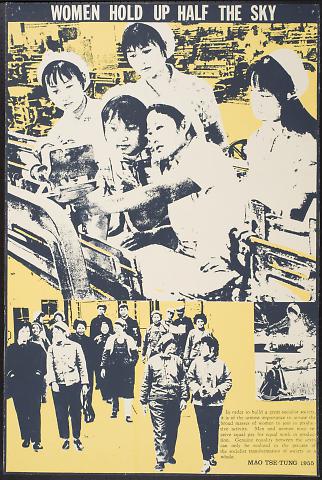
Oh, and happy International Women’s Day


postfeminism

Screen shot 2013-03-07 at 8.50.33 PM

What is postfeminism? Allegedly it is the space where we can move past feminism, where feminism no longer holds appeal to women and where it can even be harmful to women. As Melissa Gira Grant writes: 

The patriarchy’s figured out a way to outsource hatred of prostitution. They’re just going to have women do it for them.

Grant, who  is a former sex worker (to be specific: not a pimp/madam) claims that patriarchy, an amorphous “they” not rooted in material reality, has outsourced the oppression of women to women themselves. This is an argument made by many who claim that women are the ones who cut other women in other parts of the world, who participate in forcing early marriage or abuse other women in the family. Then Grant gets more specific:

I wouldn’t advocate for a feminism that’s buttoned-up and divorced of the messiness of our real lives. Your feelings are your feelings, but you’re not going to litigate your feelings about my body. The feminist ethics that I signed up for were respect for my bodily autonomy, that my experience is my experience, and that I’m an expert in my own life.

What is postfeminism? It is a desire for control over one’s destiny. It is the hope that someday, no one will call you any names or discriminate against you based on your sex. Yet, when this individual oppression ends – the oppression against prostitutes, against trans women, against my right to choose, against me, will this have achieved female liberation?

The postfeminism of today is deeply rooted in neoliberal atomization. A single female’s experiences are just as valid as any other female’s experience. A wealthy white woman who “makes the choice” to become a prostitute – her choice is equally valid as the poor woman of color who “makes the choice” to become a prostitute. Postfeminism promises the liberation of individual women, but not females. These individuals are fighting against “patriarchy”, a concept that is not individualized or even rooted in material manifestations. Rather, it is as amorphous as its own concept: a male slapping a woman, a man cat-calling a woman, or a man who makes a sexist remark at work is patriarchy rearing its ugly head from the aether. Yet a culture of objectification, where women are plastered up like slabs of meat for sale in phone booths, where women dance for money, where women continue to make $.70 on the dollar; this is not considered a war against women. After all – a woman may now make the individual “choice” to engage in these acts, in these careers, may make the individual “choice” not to bear children to get ahead in business. Acts of violence against my body are crimes against women – but larger systems of oppression suddenly become more complex, more bogged down in uncertainty as we must learn to understand that these systems are made up of individuals who have the capacity to make “choices”. 

It astounds me that leftists who might otherwise deride the idea of free choice under a capitalist system make all sorts of room for women like Grant to write privileged accounts of the system of oppression called the “sex trade”. Broader women’s movements such as the Aboriginal Women’s Action Network  might feel as though an abolitionist stance on prostitution is right and good, but, as Grant would say, they are “privileged” in that their voices are louder than hers – the voice that enjoys prostitution believes that sex work is feminist work. Indeed, the other voices aren’t heard as loudly as the abolitionists “because they’re working”. This amorphous group of women who are pleased as punch to be working as sexual objects for sale are quiet, a silent majority cowed into silence by angry groups of feminist women who claim that 90% of women want out of prostitution.

If the voice of a “queer woman who dates women in her non-sex-work life and has sex with men for work” is not heard as much as the loud majority of feminists who want an end to prostitution, this is because women who “choose” sex work, who come at it from a political perspective of “empowerment” are in the extreme minority. But the individual reigns supreme over the masses in postfeminism just as it does in neoliberalism. When a woman demands her “right to choose”, she is demanding her right. She is situating feminism in a sphere where she does not feel fettered by her sex, where she personally has the ability to pursue whatever she wants. If she is a stripper and a man touches her inappropriately, this is a battle in the war against male domination – but the very institution that shapes his thinking is not in and of itself oppressive. Male domination is boiled down to the individual, becomes a question of one human exerting his will over another’s in an unfair way. It is no longer about systems of oppression, cultures of abuse, or industries of suffering. We are boiled down once again to our individual experiences.

A single person cannot change the world because change is the prerogative of the people. There is no such thing as a mass movement of individuals – they might all be walking in the same direction, but they are checking their smartphones and turning off onto a side street the moment they are required to check their egos at the door.

Melissa Gira Grant’s views are not just dangerous because they blame women themselves for their own oppression –  either as angry sex-negative feminists or individuals who just make “bad choices”. They are dangerous because they shift the blame away from male violence and domination and continue to trump the experiences of a privileged few over the many. Why won’t these leftist blogs and magazines run a counter article to this kind of perspective? Anything else would be hypocritical. Perhaps it is simply not what leftist men want to hear: that their individual enjoyment is not the purpose of female liberation.

Image

crumbling infrastructure

crumbling infrastructure

will my friends in europe believe this is how we live in the “richest” city on earth?

Grandpa, what is “content marketing”?

this is how deep the rabbit hole goes

The first and most important thing you need to understand about content marketing is that it is currently keeping the print medium alive. I don’t just mean news, I mean everything. This is the most important aspect even without knowing exactly what content marketing is, because it paints us a picture of how it all came to this.

“Disruptive innovation” is the industry buzzword for new cheap gadgets being pushed out of South Asian work camps that replace last year’s gadget everyone paid $500 for.  There is a broader, more longer view to be had though – for sure, print wasn’t in so much trouble until tablets and blogs came along. Now, consumers of Vogue or The Atlantic can quickly block all the ads ruining their experience. I once asked my mother to buy me a ladies’s magazine. She bought one, sat me down at the kitchen table, and proceeded to rip all the ads out of them. By the time she was done, only about 20 or so odd pages were left in the 200 page magazine. I’ve never bought a ladies’s magazine myself. And nowadays, others can push away the ads in favor of Adblock Plus or a quick click on their Kindle as well. What’s more, most magazines and newspapers sell their digital subscriptions at a discount – as if the paper is what you’re buying for the money, not what’s written on it. Meanwhile, people from my generation are more likely to visit their daily blogs for free rather than shell out $7 for the latest issue of the Economist.

This kind of shift in medium coupled with the new hyperdrive crisis circuit of capitalism has resulted in a fatal blow for print journalism. What is the result? Step into any office and the desperation is thick in the air. I watched the publisher stand with his head in his hands: “Where are we going to find a million dollars?”

The answer is content marketing. Gone are the days of full page ads next to content, gone are the days of “sponsored messages” that run next to content, gone even are the days of embedding our journalists with the troops. Now the money that print makes is no where near the content, it’s as far away from the masthead as possible – GM can go to *INSERT POPULAR PAPER* and pay them to start a blog on behalf of GM, using house journalists and house researchers, not to mention house support resources. They will promote this blog using all sorts of sinister search engines – you might not even know this blog is sponsored by GM. The paper can write white papers for government officials, all with house PhDs and former lawmakers, they can shmooze with the fat cats on K street and no one will ever know that it amounts to financial propaganda.

Of course, the print sector is quick to cover their ass and claim this is about integrity. They keep it from the masthead to reserve their integrity. Fair enough. But what about the resources, the writers? Lois Lane can’t contribute to the Monsanto blog and then very well publish a story in the masthead blasting Monsanto, can she? It’s backdoor blackmail – you want your integrity so bad? Well just make sure you don’t look like a hypocrite when you publish your 4000 word expose on how Monsanto is poisoning our lakes and streams worldwide. Instead of avoiding Monsanto’s new scandal because of a simple and clearly visible sponsor conflict, which might cause eyebrows to raise, Lois Lane’s day employer avoids honest reporting and it seems spontaneous, even legitimate.

What’s really shocking is the number of bloggers caught up in this game. While print journalism seems at the very least slightly uncomfortable using their good names and resources passed around as marketing contacts, bloggers are clambering to finally get paid for what they’ve been doing for free for years. With no fancy j-school credentials, they don’t even have the slightest twinge of regret. Thousands of easily reachable social influencers, I Mean Bloggers, lie in wait behind expensive marketing paywalls, ready to shill for whoever will pass them a hundred bucks. This is not to impugne on blogging, or bloggers for that matter. I take issue with a market where millions upon millions of us are generating content that is eventually capitalized and we never see a cent for. I take issue with the death of journalism and with the death of print. As wages continue their freefall, the only journalists left to be hired at major papers will be from rich families and probably married into these scandals anyway.