Category Archives: israel

Ramallah Syndrome

– Munir:
I wrote an article about Ramallah and Gaza. I said: Gaza is being destroyed form outside and the main tool is the Israeli army, Ramallah is being destroyed from the inside, and the main tool is the World Bank – which is the consumption. The consumption pattern is really getting inside of us, our thinking and our perceptions; and our relationships etc. are decided totally by this pattern.

All the talk about Gaza is about how can we ruin it from the inside. The idea of ‘help’ and paying money and reconstruction and so on, is actually to finish Gaza from the inside. As long as the destruction is only from the outside, Gaza is safe. Ramallah is not safe. Because on the outside it looks like everything is fine and everything is flourishing, so I feel… development projects change the city in ways that are much worse than sometimes destroying a few buildings here and there.

I want to say something about the word resistance. When an army invades you resist the army. When consumption invades you resist consumption. Ramallah is not resisting consumption.

– Manal:
What do you mean by consumption?

– Munir:
The number of workshops in Ramallah is consumption beyond belief, for example. Another one is the rise of the banks – Ramallah it is becoming the hub…

– Manal:
This is happening everywhere…!

– Munir:
We have to resist the pattern of living is being imposed on us but very sweetly … but this is how the world has been conquered.

– Manal:
I see consumption everywhere, not only in Ramallah. It’s the mentality of societies everywhere. In Damascus – an unoccupied place – consumption is everywhere. It is a world plan. I want you not to just collect the issues and see them in Ramallah…don’t just condense everything in Ramallah.

– Nasser:
But what’s interesting in Ramallah, what’s specific about it, is that the creation of a regime of consumption is precisely linked to the occupation by army Munir was talking about. Actually there is not such a split between occupation through consumption and occupation through army, they are two intertwined and interlinked things. It is about the creation of new subjectivities, people think differently, you are reconstituting subjects, reconfiguring people…the radicality of the situation here positions this in a much wider process of fragmentation and bantustanization; it means that here consumption cannot be separated from the colonial regime.

[Extracts from conversation No. 5]

I saw the first sign at Snobar and the second one today at Prontos. “Who is Celebrating Ramallah?” today’s sign asks. The signs are only in English and seem to be geared towards the audience of expats or those blessed to know today’s global lingua franca. I met with a friend in Jerusalem yesterday who is going north to watch checkpoints with EAPPI for a while. She just couldn’t believe what I was telling her about Ramallah. Wait’ll you see, I told her. Wait’ll you see. I tried to find out more about “Ramallah Syndrome”, and though the signs are new, their website hasn’t been updated in nearly a year. It’s delightfully surreal because I feel like I’ve been talking to a brick wall the whole time I’ve been in this city. These signs sit on walls like angels on my shoulders. If anyone knows where I can find them, please let me know.

More on Remote Warfare: Spot & Shoot

Israel continues to lead the way arm in arm with the United States when it comes to state of the art remote warfare tactics.

It is called Spot and Shoot. Operators sit in front of a TV monitor from which they can control the action with a PlayStation-style joystick.

The aim: to kill.

Played by: young women serving in the Israeli army.

Spot and Shoot, as it is called by the Israeli military, may look like a video game but the figures on the screen are real people – Palestinians in Gaza – who can be killed with the press of a button on the joystick.
The female soldiers, located far away in an operations room, are responsible for aiming and firing remote-controlled machine-guns mounted on watch-towers every few hundred metres along an electronic fence that surrounds Gaza…..

The Spot and Shoot system – officially known as Sentry Tech – has mostly attracted attention because it is operated by 19- and 20-year-old female soldiers, making it the Israeli army’s only weapons system operated exclusively by women.

Female soldiers are preferred to operate remote killing devices because of a shortage of male recruits to Israel’s combat units. Young women can carry out missions without breaking the social taboo of risking their lives, said Mr Brom.

The women are supposed to identify anyone suspicious approaching the fence around Gaza and, if authorised by an officer, execute them using their joysticks…..

The Haaretz newspaper, which was given rare access to a Sentry Tech control room, quoted one soldier, Bar Keren, 20, last week saying: “It’s very alluring to be the one to do this. But not everyone wants this job. It’s no simple matter to take up a joystick like that of a Sony PlayStation and kill, but ultimately it’s for defence.”

Audio sensors on the towers mean that the women hear the shot as it kills the target. No woman, Haaretz reported, had failed the task of shooting what the army calls an “incriminated” Palestinian.

from The National

Perhaps an under examined aspect of remote warfare is its possible feminist “benefits”, allowing women to serve on the front lines of battle as pilots and infantry. However, since they themselves are not at immediate risk of death (unlike the Palestinian wandering into an unmarked “no-go zone”) can we really call it feminist, if even defense as Ms. Keren mentions? More interesting would be the mentality behind the idea that sitting in a room in Nazareth and killing Palestinians hundreds of kilometers away can be considered and internalized by the participants as “defense”.

Regardless, by allowing women to participate in killing without being subject to the horrors of war, we further eliminate possibilities of international female solidarity while also implicating first world women as equal-opportunity participants in extrajudicial remote warfare.

Ramallah Majnoona: “a mirror city of Tel Aviv”

First, you should know that I’m a Debbie Downer. I get strange looks wherever I go in life because no matter how happy any one group of people wants to be for any reason, I’m always there to hoist a wet blanket over everyone’s shoulders and tell them why they should be miserable instead. That said: there’s a lot of reason to be depressed in the West Bank. This is the land of refugee camps and suicide bombs, of weekly protest marches against the wall being violently dispersed by tear gas canisters and live ammunition. And yet Ramallah is no place for a Debbie Downer like myself.

Reading the recent articles in the BBC and New York Times about nightlife in Ramallah, you might assume Ramallah is the new Beirut of the Middle East or something, described in the NYT article as a “a mirror city of Tel Aviv.” Go to a place like Orjwan on a Thursday night and you can see the who’s-who of East Jerusalem high society home from school abroad for the summer and mingling with attractive international aid workers. I can tell you I’d never be let into a place like this in the states, but by virtue of my international stature will be ushered to the front of the line at Orjwan and allowed in before a whole throng of locals who scraped together enough shekels to make it out. The fact of the matter is that if you’re an international you can go wherever you want in Ramallah. You’re VIP royalty. Ignore your college buddies in West Jerusalem who say you’ll get stabbed or whatever. Look around you at Sangria’s or Orjwan and tell me this is the development trajectory the refugees in Balata are happy with.

After all, the truth of the matter is that because of this kind of New York Times write up, Palestinians can hardly afford rent in Ramallah nowadays. Foreigners with a 5k per month job here think $500 per month for an apartment is a real steal, but this is practically impossible for most people. Great amenities, All within walking distance of a refugee camp.  Jobs and apartments are offered to “Internationals only”. I wonder if any of these internationals driving BMWs around Ramallah have ever read Wretched of the Earth, if they realize they’re just a new class of missionaries selling beautification to a place that still has to pay with shekels.

Sorry, there I go being a Debbie Downer again. These guys just want to have a fun time and here I go raining on their parade. Who am I to tell Palestinians how to live or what kind of businesses to run? Unlike Thomas Friedman who comes in the dead of night to meet with the top crooks in the PA or BBC reporters at Snobar, I’ve talked to Palestinians who don’t particularly care for this cosmopolitan vibe emerging in Ramallah. It ends up drawing newspaper ink away from the issues that Palestinians really care about: land, justice, and peace. Pushing all the international money and offices and values into Ramallah makes people pretty suspicious that they’ll never see a capitol in Jerusalem. Plus, the importation of westerners imports western tastes, something Palestinians aren’t all particularly happy about. After all, a culture of removal from reality like one in the West results in overwhelming political apathy, like we have in the West.

Like a Palestinian told me, “these Palestinians, how are they fighting for their land?” Sure, we can write travel pieces about clubs, pizza, and women, but the New York Times has forgotten to examine other new cultural values being imported into Ramallah like drugs, gambling, and prostitution. Mothers tearfully wring their hands when their boys say they want to move to Ramallah, and with good reason. Ramallah is the tube being shoved down the throat of the Palestinians, funneling Western tastes and interests into their stomachs. Ramallah would be what some experts on colonization would call a “port city”, creating a safe haven for foreigners and fostering an elite Palestinian class that will be much more inspired to guard their comfortable lifestyles than support a popular resistance movement that may result in undue hardship from the Israelis. After all, isn’t the globalization mantra “why do it yourself when you can pay someone to do it for you for less money”?

Movie Review: Budrus

Budrus (2009, Julie Bacha) is a film about the village of Budrus and its struggle against the apartheid wall cutting through 300 acres of its land. The film follows three people, a Fatah member, a Hamas member, and a young woman who is the daughter of the Fatah member. The viewer explores the unique situation of Budrus, how it was the first village to exercise inclusive non-violent protests against the confiscation of land. It shows the brutality of the IOF perfectly as the filmmaker captures IOF soldiers beating the fellaheen with sticks and shooting at them with live ammunition. The film emphasized the people of the village and their bravery admirably, however, there were a few criticisms I must mention.

In Budrus, the filmmaker uses the rather neutral term “barrier” when referring to the wall. In addition, by the end of the film one is unclear if the filmmaker is for or against the wall, as it seems by the end that the villagers have earned a victory by forcing the Israelis to build closer to the green line (1967 borders). I think the film would have been better if it had taken a stronger stand against the wall. However, seeing as the film also took great lengths to illustrate the bravery of the Israeli leftists who joined the protests and saught to humanize one of the soldiers who was captured on film beating Palestinians, I suppose there must be a desire to reach a broad audience. Unfortunately, when one seeks to capture a broad audience they fail to accurately portray the truth, the truth being that the wall is a disgusting blight on humanity and will hopefully be seen one day in the same light (popularly) as the Berlin Wall.

I watched this movie at the Ramallah Cultural Palace with a 50/50 mix of Palestinians and foreigners. Queen Noor of Jordan was also in attendance, and it seemed many were more keen on getting a photo of her than sticking around for the question and answer session afterward. Although the main characters and filmmaker were present on stage after the showing, the woman MCing the event had to appeal to the audience to  stay for Q&A instead of rushing out to watch the World Cup match. Indeed, nobody stayed. There were only a handful left seated for the Q&A and the rest rushed off to chatter excitedly about the match while hustling to one of the Ramallah clubs to watch.

“Come on, guys! This is more important than a football match!” she pleaded.

The foreigners and Palestinians begged to differ.

the worst thing that could happen

It’s been a while because I’ve been in a bad place. The World Cup is on and everyone feels that way more important than what is happening in Palestine. The new strategy of the colonists is made visible in a place like this, where the money flows in and where the foreigners walk with heads held high. Police – four to six on street corners – play the new occupiers, hosting flying checkpoints and shaking down motorists for money and studying IDs with the same sort of sickening scrutiny you’d see at an Israeli checkpoint. The case is made when Israel feels comfortable enough with their trained PASF to pull out checkpoints and soldiers from the West Bank to work in Gaza. The case is made when Israel considers allowing the Palestinian Authority to have control over Gazan checkpoints, allowing Palestinian to continue to crush Palestinian.

Thomas Friedman wrote a disgusting article about the new elite in Ramallah a few days ago. Entitled “The Real Palestinian Revolution”, he makes the case that

The Abbas-Fayyad state-building effort is still fragile, and it rests on a small team of technocrats, Palestinian business elites and a new professional security force. The stronger this team grows, the more it challenges and will be challenged by some of the old-line Fatah Palestinian cadres in the West Bank, not to mention Hamas in Gaza. It is the only hope left, though, for a two-state solution, so it needs to be quietly supported.

What he means by fragile is what every autocratic regime in the region faces. The Abbas-Fayyad government is not elected. It is not popular with the people. Outside of Ramallah – in the camps, in the villages – it can barely claim sovereignty. My professor wistfully recalls the days when Abu Amar would come out and mix with the people. Mahmoud Abbas, on the other hand, must mix with the citizens of Palestine in much the same way Thomas Friedman does — infrequently,  in the dead of night, and under armed guard. This is a problem with any dictator in the Middle East. Recall Saddam Hussein of Iraq and his many doubles, the mysterious absence of Hosni Mubarak in public for the last twenty years, or perhaps the Jordanian Royal Family as it appears in TV and on Youtube but never under any circumstances among the people. The worst thing that could happen to Palestine is what is happening to it right now. The last bastion of actual democracy in the Middle East – Gaza – continues to be under siege and it is not just in Israel and America’s interest to starve them out, but the Palestinian Authority as well. The Palestinian Authority, as Mr. Friedman points out, is becoming a business class elite that eats up USAID money with one hand and sells out the kids in the camps with the other.

The most important thing President Obama can do when he meets Israel’s prime minister, Bibi Netanyahu, on July 6 is to nudge him to begin gradually ceding control of major West Bank Palestinian cities to the Palestinian Authority so that Fayyad can show his people, as he puts it, that what he is building is an independent state “not an exercise in adapting to the permanence of occupation” — and so that Israel can test if the new Palestinian security forces really can keep the peace without Israel making nighttime raids. Nothing would strengthen Fayyadism more than that.

Now that the Palestinian Authority is run by old guard corrupt PLO, American-educated hyper-capitalist technocrats, and an American-trained police force, Mr. Friedman finally feels comfortable outsourcing the occupation of the Palestinian people to the Palestinians themselves. This will be accomplished by two means: hard and soft pressure. The police will continue the nighttime raids for the Israelis and will gladly torture and imprison their own countrymen for the Israelis. Meanwhile, imported goods and cultural lifestyles (will write more on this later) will lull the Palestinians of Ramallah to sleep long enough for the foxes to make off with the chickens. One day the Palestinians of Ramallah will shake off their hangovers, wake up, and realize their birthright has been sold for a handful of shekels and false-peace talks. I mean really, what is a securities exchange that runs on foreign currency or a peace talk that can claim with a straight face that East Jerusalem will ever belong to Palestine? After they wake up, that’s when the blood will come again, but this time the Israelis and their American masters will be pleased to note it is Palestinian killing Palestinian, Palestinian imprisoning Palestinian. Just like 2006. Unity is smashed through capital and pressure. The American-Israelis can continue their beach-side siestas in Tel Aviv without worrying about someone coming for their privilege… no, the creation of such a successfully fragile “state-building effort”, one that will constantly depend on their masters for continued existence, will ensure their security for years to come.

wiped away

Like the lives of the activists, in one single sweep Israel’s pirate ship massacre is wiped from the front pages. Even the loss of an American citizen, the Golden Goose of victims, is seemingly unimportant.

WASHINGTON – President Barack Obama said Thursday that the deadly Israeli raid on an aid flotilla bound for the Gaza Strip was “tragic”, but he stopped short of condemning the actions of Israeli forces.

defending the indefensible

From Foreign Policy magazine:

1. We didn’t do it! (Denials usually don’t work, but it’s worth a try).

2. We know you think we did it but we aren’t admitting anything.

3. Actually, maybe we did do something but not what we are accused of doing.

4. Ok, we did it but it wasn’t that bad (“waterboarding isn’t really torture, you know”).

5. Well, maybe it was pretty bad but it was justified or necessary. (We only torture terrorists, or suspected terrorists, or people who might know a terrorist…”)

6. What we did was really quite restrained, when you consider how powerful we really are. I mean, we could have done something even worse.

7. Besides, what we did was technically legal under some interpretations of international law (or at least as our lawyers interpret the law as it applies to us.)

8. Don’t forget: the other side is much worse. In fact, they’re evil. Really.

9. Plus, they started it.

10. And remember: We are the good guys. We are not morally equivalent to the bad guys no matter what we did. Only morally obtuse, misguided critics could fail to see this fundamental distinction between Them and Us.

11. The results may have been imperfect, but our intentions were noble. (Invading Iraq may have resulted in tens of thousands of dead and wounded and millions of refugees, but we meant well.)

12. We have to do things like this to maintain our credibility. You don’t want to encourage those bad guys, do you?

13. Especially because the only language the other side understands is force.

14. In fact, it was imperative to teach them a lesson. For the Nth time.

15. If we hadn’t done this to them they would undoubtedly have done something even worse to us. Well, maybe not. But who could take that chance?

16. In fact, no responsible government could have acted otherwise in the face of such provocation.

17. Plus, we had no choice. What we did may have been awful, but all other policy options had failed and/or nothing else would have worked.

18. It’s a tough world out there and Serious People understand that sometimes you have to do these things. Only ignorant idealists, terrorist sympathizers, craven appeasers and/or treasonous liberals would question our actions.

19. In fact, whatever we did will be worth it eventually, and someday the rest of the world will thank us.

20. We are the victims of a double-standard. Other states do the same things (or worse) and nobody complains about them. What we did was therefore permissible.

21. And if you keep criticizing us, we’ll get really upset and then we might do something really crazy. You don’t want that, do you?

ahlan wa sahlan

Besides the fact that settlers have spray painted out most of the Arabic and English on road signs in the West Bank, not much has changed. Things get worse bit by bit here, slow and steady wins the race. A frog in the pan. There are more Israeli flags littering the countryside. A friend’s wife has been finally denied entry to the West Bank and their family is under threat. Otherwise, the falafel and kunafa taste the same. Slight municipal improvements are visible in Nablus Old City. I’ll be focusing on the economic development while I’m here, but I won’t be constraining myself with regards to subjects on my blog.

However, I’m really soliciting some articles. I’ll be writing my experiences here and I suffer from tunnel vision. The format will change slightly, so bear with me. I’m still suffering from jet lag, so I’ll write more in a few days.

Occupation Humor

Haaretz reports that settlers in Gush Etzion are protesting the Israeli apartheid wall that is supposed to cut through the land south of Jerusalem. In fact, the land is slated to be built into a new colony and I guess the settlers don’t want a big ugly wall running through the center of their “neighborhood”!

The Givat Yael company has launched a public campaign to persuade the Defense Ministry to reroute the separation fence southeast of Jerusalem to enable construction of a new neighborhood beyond the Green Line.

Environmental organizations, residents of the Arab village of Walaja – which abuts the planned neighborhood – and settlers from Gush Etzion have all joined the campaign, saying the fence’s present route is destructive both to people and the environment.

The fence could also crush Givat Yael’s chances of ever being built, as it cuts the new neighborhood’s planned area in two, reducing the land value.

Danny Tirza, a former top Defense Ministry official who planned the separation fence, today suggests moving it so that all of Walaja is on the Israeli side. The company had asked Tirza to propose an alternative fence route.

The present route is harmful to both Palestinians and the developers, he wrote in a document for the Givat Yael company, which Haaretz has obtained.

As currently proposed, the fence would be ineffective for security and detrimental to nature, Tirza wrote about the route he himself planned. The new route would improve security and eliminate local Palestinians’ “sense of suffocation.” It would also minimize the environmental damage and enable Givat Yael to be built, as well as being shorter and cheaper, he said.

“This route is good for both Jews and Arabs,” he asserted yesterday.

The greens and the settlers are holding a joint demonstration against the fence today. Palestinians have also demonstrated against the fence in recent days, at times clashing violently with security forces.

Businessmen Benny and Danny Cohen, who bought 2,500 dunams in the area 20 years ago, have been trying for years to promote the Givat Yael project, consisting of 13,000 housing units.

But the plan is expected to rouse the American administration’s ire, and is thus not likely to be implemented in the next few years.

“I realize that at the moment, the neighborhood is irrelevant,” Danny Cohen said. “But I believe it will rise even if we wait another 10 years. There will be no choice but to build it,” to accommodate Jerusalem’s need for new housing, he said.

The proposed neighborhood would be built in the city’s southeast, near the Malha mall and the Biblical Zoo. The plans, which were drawn up six years ago, call for a major residential area that would ultimately house some 45,000 people, as well as commercial areas and a sports club.

Defense officials yesterday blasted Tirza’s proposed new route, saying it violates the principle that the fence must be as close to the Green Line as possible to avoid annexing Palestinian lands and people.

“It is not proper for the man who planned the fence, and defended its route in court, to suddenly become a businessman and attack the route,” one defense official said.

The Defense Ministry commented: “The fence was approved by the government and the court. The planned route provides the best security solution and causes the least harm to the Palestinian community and the environment.”

My favorite part of this story is how the settlers feign concern for the Palestinians and their “sense of suffocation”. Personally, I think if they cared about that they probably wouldn’t have a fence or a blockade in place. If they were so concerned about negative feelings, why the occupation? Perhaps the more pressing concern is the “environment”. Make me laugh twice! It’s the pathetic excuse the Jerusalem municipality comes up with when they argue they don’t want to build in parts of West Jerusalem because it could harm some fluffy bunnies hopping along merrily in the hills. It follows that Palestinians are lower than fluffy bunnies, as they end up being tossed to the curb in the rabbit’s stead.  I suppose this means the settlers are incredibly sensitive people, as they’re worried about both the environment and the Palestinians!

Lights Out for Gaza


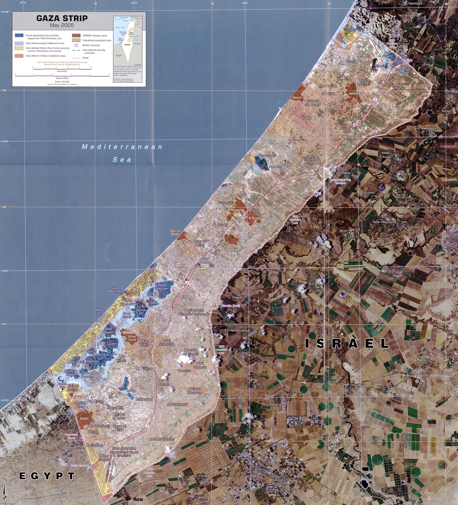
Gaza’s single power plant ran out of fuel today, blanketing the Gaza Strip in darkness for at least the weekend.
Crossings into Gaza may open in Israel and fuel may be allowed through on Sunday at the earliest. This is in spite of the best efforts of the Palestinian engineers who have kept the plant running despite all number of obstacles in the past.

Occasionally, one has to step back and review the situation completely. So let’s start at the beginning: What sins did Gaza commit to deserve this kind of genocide?

I say genocide because there no longer is a viable future for the people of Gaza. All hopes for that have been dashed by the laboratory conditions of their existence. Gaza is being wiped out. What’s shocking to me is that despite this laboratory being open to public view and participation, Israel continues to wreck fire and brimstone down on the heads of nearly 800,000 children without the slightest concern of anyone stepping in to stop this.


Consider the number of children whose lives have been completely ruined by the effects of constant warfare, poverty, and imprisonment. This is a generation that has only known this kind of existence. A surprising amount of children  require hearing aids because of excessive, constant sonic booms over Gaza. To this, Rannan Gissim said, “The inconvenience that it causes the Palestinian population cannot be measured against the question of life or death for Israelis on the other side.” Do deaf Gazan children really present a life or death situation to Israel? Many are malnourished and losing access to decent health care and even clean water. Excessive salination is causing a breakdown in Gaza’s well-based water supply. Food is only allowed into the Gaza Strip through checkpoints that too often close arbitrarily. Over 30% of Gaza’s airable land is a Shoot-on-Sight No Man’s Land. Just this past week, new clothes and shoes were allowed through the checkpoints.

Gaza has over 800,000 children who are underfed, malnourished, poorly-clothed, deaf, sick, and without any kind of prospects for the future. In addition, now they are also living without electrical power.

I wonder how much longer this will last. I’m appealing to your emotions, but I have to. These are children. I get emotional about children. When I see a few hundred thousand suffering like this, I have to hope you feel the same way I do. Palestinian children are worth just as much as any child on Earth. Why is nothing being done to help them?

Gaza has rockets and tunnels of course. Supplies are smuggled in at fear of immediate death for the workers. These tunnels are routinely bombed and collapse often. While they bring through ingredients to go into a rocket (sugar, for instance), they also bring through supplies and food. They are a necessity for survival. Rockets, on the other hand, are a sick cry of pride. It’s obvious by their construction they are both the proudest and the saddest attempt at resistance. With so little, Gazans can only fashion together rockets that certainly pale in comparison to the lethal power of Israel’s arsenal. They try, though, to do something – anything – to save their children and strike back at their hopeless situation.

If it were you in such a situation, what wouldn’t you do? Can we even comprehend behind our television and computer screens what it might be like to live in Gaza?

The existence of this kind of genocide means that it can happen anywhere. Like smallpox, we have to eradicate genocide completely in order to be rid of it. For the rest of the world, it’s Lights Out for Gaza. Unless we can wake up and truly understand what’s happening, we will end up like frogs in the pan. We will wake up one day and say to each other, wow, remember when there were Gazans?

Links:

Donate to UNRWA

Gaza Health WTO Health Sheet January 2010

The Gaza Strip as Laboratory: Note in the Wake of Disengagement (PDF)

Gaza Power Strip (IEEE report)