
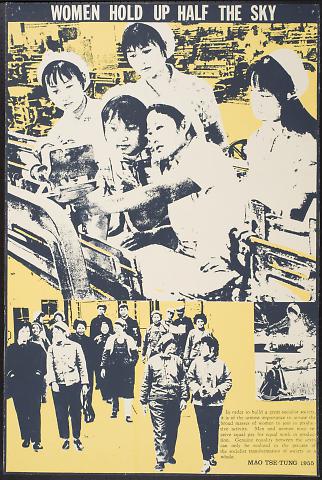


What is postfeminism? Allegedly it is the space where we can move past feminism, where feminism no longer holds appeal to women and where it can even be harmful to women. As Melissa Gira Grant writes:
The patriarchy’s figured out a way to outsource hatred of prostitution. They’re just going to have women do it for them.
Grant, who is a former sex worker (to be specific: not a pimp/madam) claims that patriarchy, an amorphous “they” not rooted in material reality, has outsourced the oppression of women to women themselves. This is an argument made by many who claim that women are the ones who cut other women in other parts of the world, who participate in forcing early marriage or abuse other women in the family. Then Grant gets more specific:
I wouldn’t advocate for a feminism that’s buttoned-up and divorced of the messiness of our real lives. Your feelings are your feelings, but you’re not going to litigate your feelings about my body. The feminist ethics that I signed up for were respect for my bodily autonomy, that my experience is my experience, and that I’m an expert in my own life.
What is postfeminism? It is a desire for control over one’s destiny. It is the hope that someday, no one will call you any names or discriminate against you based on your sex. Yet, when this individual oppression ends – the oppression against prostitutes, against trans women, against my right to choose, against me, will this have achieved female liberation?
The postfeminism of today is deeply rooted in neoliberal atomization. A single female’s experiences are just as valid as any other female’s experience. A wealthy white woman who “makes the choice” to become a prostitute – her choice is equally valid as the poor woman of color who “makes the choice” to become a prostitute. Postfeminism promises the liberation of individual women, but not females. These individuals are fighting against “patriarchy”, a concept that is not individualized or even rooted in material manifestations. Rather, it is as amorphous as its own concept: a male slapping a woman, a man cat-calling a woman, or a man who makes a sexist remark at work is patriarchy rearing its ugly head from the aether. Yet a culture of objectification, where women are plastered up like slabs of meat for sale in phone booths, where women dance for money, where women continue to make $.70 on the dollar; this is not considered a war against women. After all – a woman may now make the individual “choice” to engage in these acts, in these careers, may make the individual “choice” not to bear children to get ahead in business. Acts of violence against my body are crimes against women – but larger systems of oppression suddenly become more complex, more bogged down in uncertainty as we must learn to understand that these systems are made up of individuals who have the capacity to make “choices”.
It astounds me that leftists who might otherwise deride the idea of free choice under a capitalist system make all sorts of room for women like Grant to write privileged accounts of the system of oppression called the “sex trade”. Broader women’s movements such as the Aboriginal Women’s Action Network might feel as though an abolitionist stance on prostitution is right and good, but, as Grant would say, they are “privileged” in that their voices are louder than hers – the voice that enjoys prostitution believes that sex work is feminist work. Indeed, the other voices aren’t heard as loudly as the abolitionists “because they’re working”. This amorphous group of women who are pleased as punch to be working as sexual objects for sale are quiet, a silent majority cowed into silence by angry groups of feminist women who claim that 90% of women want out of prostitution.
If the voice of a “queer woman who dates women in her non-sex-work life and has sex with men for work” is not heard as much as the loud majority of feminists who want an end to prostitution, this is because women who “choose” sex work, who come at it from a political perspective of “empowerment” are in the extreme minority. But the individual reigns supreme over the masses in postfeminism just as it does in neoliberalism. When a woman demands her “right to choose”, she is demanding her right. She is situating feminism in a sphere where she does not feel fettered by her sex, where she personally has the ability to pursue whatever she wants. If she is a stripper and a man touches her inappropriately, this is a battle in the war against male domination – but the very institution that shapes his thinking is not in and of itself oppressive. Male domination is boiled down to the individual, becomes a question of one human exerting his will over another’s in an unfair way. It is no longer about systems of oppression, cultures of abuse, or industries of suffering. We are boiled down once again to our individual experiences.
A single person cannot change the world because change is the prerogative of the people. There is no such thing as a mass movement of individuals – they might all be walking in the same direction, but they are checking their smartphones and turning off onto a side street the moment they are required to check their egos at the door.
Melissa Gira Grant’s views are not just dangerous because they blame women themselves for their own oppression – either as angry sex-negative feminists or individuals who just make “bad choices”. They are dangerous because they shift the blame away from male violence and domination and continue to trump the experiences of a privileged few over the many. Why won’t these leftist blogs and magazines run a counter article to this kind of perspective? Anything else would be hypocritical. Perhaps it is simply not what leftist men want to hear: that their individual enjoyment is not the purpose of female liberation.

will my friends in europe believe this is how we live in the “richest” city on earth?
How did Denam Drew feel about people watching his brain while he looked at shoes?
“It’s a little weird but it’s not too invasive. I don’t have too crazy reactions to shoes,” he said, walking through the mall with his head wired up in an EEG cap and still wearing the eye tracking goggles.
Capitalism. Am I right? CBC dives into neuromarketing.
Meanwhile, scientists are quickly finding new ways to make you smooth and supple between the ears by burning your pleasure center for a 10% better chance at kicking heroin.
Politico covers the new embarassing AIG ad campaign thanking American citizens for filling the 1%’s pockets with even more undeserved and unearned money.
I’d hear this sort of thing all the time when I was living in Palestine, but it seems as though Israel is getting more serious about keeping foreigners sympathetic to Palestinians out of the 48.
Despite it all, Egypt’s labor movement is stronger than ever and this is threatening to the powers that currently be. The unsung heroes of the Arab Spring get a work-up in the Egyptian Independent.
Meanwhile, and thank god, Amith Gupta takes on the orientalism surrounding the recent protests against rape in India for Jadaliyya.
Posted in link roundup, Uncategorized
I’ll be back to regularly posting tomorrow. I have a post on the labor market I’m editing right now, but it being new years and all…
Here’s to revolution in March!
Dennis Kosuth reviews the general body count of life under capitalism for the Socialist Worker.
Tel Aviv University objecting to supporting settler-run dig, mainly due to fear of a cultural and educational boycott.
New York Times reports on class’s role in education success. Well gosh, who’d have thought?
Anyone care to guess how many children Israel arrested this year? It’s 900.
Interesting story in Counterpunch on how Rupert Murdoch quite boldly tried to buy the US Presidency in 2012.
Posted in link roundup, Uncategorized
James Mollison takes a look at childhood bedrooms from nine different countries for Mother Jones.
Sarah Leonard explores the ramifications and meaning of Marissa Mayer, the new CEO of Yahoo! and a pregnant mother who works 160 hour weeks for The Jacobin.
Amanda Marcotte of Salon explores the scandal of the Good Men Project publishing rape stories – from the rapist’s perspective.
An oldie but new for me (I don’t have a subscription to the NYT ha): Steven Greenhouse reports on the rising tide and tribulations of our growing American army of part time employees.
Īáñ Œ Gøødrüm has another take on the holiday film season and it’s throbbing obsession with slavery – both Lincoln and Django.
Rhizzone user “stegosaurus” has transcribed and bound English language versions of the Maoist classic “Selected Essays on the Study of Philosophy by Workers, Peasants and Soldiers” for free. From the editor’s note:
The broad masses of workers, peasants and soldiers have written excellent essays telling how they study and apply Chairman Mao’s philosophic thinking in their revolutionary struggle. The nine selected here are only a small part. They are factual and reason things out, are pungent in style and set forth a clear-cut point of view. Vividly reflecting on the rich gains of China’s workers, peasants and soldiers from living study and application of Chairman Mao’s philosophic thinking, they are eloquent proof that workers, peasants and soldiers should and can master philosophy, and thus declare total bankruptcy for the fallacy that “philosophy is mysterious.”
Posted in link roundup, Uncategorized
Hello all,
I’m starting this blog up again after a long hiatus I have adblock software on my browser, but I know not everyone does. In the spirit of the season I wanted to ask if anyone browsing this blog would donate towards making it ad-free. The cost is $30 a year and seeing as payroll is behind, due to holidays, I thought there no harm in asking. It might be possible to buy credits through the store.. otherwise, I swear to god I’ll spend the $30 on getting rid of ads.
Red salute!
T
Posted in Uncategorized
I recently got into graduate school and am seeking funding opportunities. If you or anyone you know may have a lead for me, please email editor.manifesto AT gmail.com. Thank you.
Posted in Uncategorized

Turkish water, Arab Gulf capital, Egyptian labor, and Israeli know-how will join hands in a sheer material enterprise with no identity or sense of direction. Consequently, there will be no feeling of pain caused by loss of dignity.
from “The Imperialist Epistemological Vision” by Abdulwahab al Masseri
The Muslim world is a giant untapped well of power. Geo-strategically, the Middle East has always been important – straddling important trade routes and acting as a bridge between several continents. Even the Muslim minorities of the world, that is where Muslims make up a minority stake in a society, contain roughly 40% of the global ummah. Acting as a unified actor, the Muslim world is over a billion strong and contains much of the world’s capital and resources.
The issue is a splintering of the ummah that followed the rightly guided caliphs and the Golden Age of Islam. At one point, the Muslim world was one unified empire stretching from the Himalayas to the Straits of Gibraltar. Societies kept their identities and ways of life provided they were not against basic principles of Islamic governance. Identities were forged within the Muslim world – indeed, Egyptians in particular have always been fiercely nationalistic – but the kind of nationalism imported since the end of direct colonialism in the area is new and unfamiliar to many Muslims who still see themselves as Muslim first – Indian, Pakistani, Iraqi, Filipino second.
At the top of this Islamic world sits some of the greatest concentration of capital in the Gulf countries. Glimmering skyscrapers towering over empty streets, air-conditioned stadiums, and the sheikhas gliding through malls covered in black and gold, their filipino servants trailing behind buckling under the weight of shopping bags. It’s no wonder this Islamic elite has come under attack in recent decades by AQAP (Al Qaeda in the Arabian Peninsula) as both an attempt at capital accumulation and an ancient drive from sects from the Sufis to the Khajarites who sought to deliver divine justice to the corrupt heads of the Caliphate. These today being those who control the capital and the two holy mosques of Mecca and Medina.
Yet the strategy has shifted in recent years and rage has grown considerably in these offshoot groups. Instead of seeing the House of Saud as solely responsible for their predicament of addictive shopping and rampant tastes of luxury, the global Islamic resistance movement have lifted their eyes to the very top – America and Europe. By smashing at the dollar they are forcing the rich and corrupt among them to either reconsider their lifestyles or run for the hills, as seen recently in Tunisia.
What part does Israel play in such a strategy? Abdullah Azzam, famous mujahid in Afghanistan, became somewhat disillusioned as he was told to keep his desire for jihad against Israel on the back-burner and continue his focus against the Soviets. Is it any surprise that he and others who shared his view suddenly turned up dead in Peshawar – their suspected killers being Iranian Intelligence, Mossad, or even Osama bin Laden himself? Why is Israel so protected from the brunt of Islamic militarism? The simple answer may be that it represents a strategic interest to foreign colonial powers. Considering that hundreds of millions of dollars worth of military equipment is kept in storage in Israel and their physical presence as a thorn in the side of the Middle East, this could be true. Yet they are becoming more and more brave, unafraid of keeping their American masters pleased with their progress. Why is this? I’ve come to understand that Israel poses little threat and possesses no real strength in its current position – it’s very presence in the Middle East is part of the strategy.
The decaying, autocratic Middle East and the Muslim world in general is propped up by a wilting dollar. Israel is the gun held to the heads of the Arab capitals, ensuring that they will not jump ship. Imagine an intricate game of mouse-trap, with the final string of yarn tied around the trigger of a Tavor held by the Israeli government. It is in their interest as well that the dollar sustains, considering much of their foreign capital is held abroad and – if one is to imagine (as Israelis themselves do) that Jews worldwide are simply expat Israelis, a large portion of their population and subsequent charitable income and moral support depends on it as well. The methods Israel uses for colonial advancement are dollar-heavy and follow traditional, if not sloppy, methods of free-trade strategy.
Like the housing bubble, nearly anything will be done to keep the system afloat in the Middle East, to keep the money from the Gulf tied up in luxury yachts and the rest of it tied up in weapons. In such a high pressure situation – that is to keep this attempt to keep the bubble inflated – nearly everyone’s interests will be to sustain the status quo, especially when it comes to the dollar. The Saudis want to stay in power, the Assads want to stay in power, the Hashemites want to stay in power, Mubarak wants to stay in power, and the Israelis want to continue making money and building settlements. Everything about Middle East diplomacy is about keeping thirty cats from scratching each other to death while someone else keeps stealing all the cheese. So where do those who want to change the status quo hit the hardest?

Maybe it takes years for the seeds to sprout, but as unrest begins to ripple across the Maghreb from Algeria to Tunisia to Libya to Egypt, we can see the house of cards start to tremble something terrible.
Posted in afghanistan, america, capitalism, imperialism, iraq, Islam, israel, neo-colonialism, occupation, palestine, terrorism, the future, Uncategorized, war, warfare, western lifestyle, Western perspective
Tagged 9/11, afghanistan, america, bringing down the dollar, capitalism, global caliphate, global collapse, iraq, Islam, osama bin laden, terrorism, terrorist strategy, the dollar, the future, The Imperialist Epistemological Vision, war
 m a n y f e s t ø