Category Archives: Western perspective

the palestine papers


I’ve been learning how to play chess. So far I’m only able to see four moves ahead, which makes me a pretty mediocre player. I’ve only won two games so far, but I’m trying every day to be able to see more and more moves ahead, to work out different scenarios and keep them running parallel so I can advance. What I’ve gathered so far, though, is that the most important part of chess is to be able to react to an opponent’s moves with a clear mind and steady hand.

So when I see something like The Palestine Papers being published by Al Jazeera, I have to stop and examine the board critically before I react. Some facts to consider:

  • Al Jazeera is a state-owned and state-run news organization.

A reaction I heard today was that Al Jazeera works for the Israeli Foreign Ministry. While this may not be true in a literal sense, we can’t forget that Al Jazeera is an incredibly powerful wing of the Qatari foreign ministry. Qatar has been courting foreign money by the fistfuls, bringing in international games, conferences on private security companies, and offering terrific incentives to multinational corporations.  Whatever Al Jazeera was ten years ago, they are not the same organization today.

  • The Palestinian Authority / Palestinian Liberation Organization has to negotiate with the Israelis if they want to gain international support.

Since – according to the intelligentsia – armed and civil resistance has failed, the only way towards survival is to court the support of the international community. The PA does this in two ways, through economic and diplomatic means. Through economics, they present themselves as an easy place to do cheap and dirty business. Through diplomacy, they hustle from embassy to embassy begging for recognition while using their presence at the UN to pressure for resolutions condemning the Israeli occupation. The only way they are able to sustain either of these fronts, though, is through appearing as a valid party in negotiations with the Israelis. Therefore, to keep both outreach approaches strong, they must continue with negotiations at all costs, even if this means offering bizarre concessions to the Israelis. The fact that the PA is still willing to “play ball” after the genocide in Gaza and continued appropriation of land in the West Bank is proof of this, since any strong actor would have abandoned negotiations long ago. But the Palestinian Authority is not the strong actor. Their grip on power is contingent on whether anyone will meet with them. If the Israelis and Americans continue to meet with them, the sick truth is that the rest of the world will see them as valid representatives for the Palestinian people.

  • Both the Palestinian Authority / Palestinian Liberation Organization and the Israelis must sustain the negotiation process in order to maintain the status quo abroad while advancing interests locally.

This is why the peace process never fails. It simply stalls or is frozen, perhaps moving from direct to indirect negotiations from time to time. The present negotiations between the two parties have painfully dragged along for nearly two decades with nothing to speak of except continued encroachment of the West Bank and Gaza while the Palestinian Authority gains stature in the eyes of the international community.

Yet it is not just Israel and the PNA/PLO that benefit from these negotiations. The USA uses them as election fodder and the Arab states use them as an excuse to continue business-as-usual with Israel while neglecting the refugees that crowd their borders.

So what is the point of releasing these documents? Barring some sort of collective madness, the Palestinian people are not going to overthrow the PNA and expel the PLO. Gaza is a stark, daily reminder of what happens to a people who decide to stop playing the game. It’s possible the Israelis will look bad for not accepting such gracious concessions, and that the Palestinians offering them nearly all of East Jerusalem and their major settlement blocs will make it seem as though they are negotiating in bad faith.

However, without further facts at this point, the only conclusion I can draw is that this is a move designed to humiliate the Palestinian people further. They are being shamed for not being able to change their current situation. Really, this has been the overarching theme to the occupation that I’ve seen so far since living here: instill shame. Whether through stumbling drunk teenagers in Ramallah plotting their ticket out, hassle at the checkpoint, constantly jumping through hoops for a job or foreign aid money, casual cancellation of elections, and being forced at gunpoint to the negotiation table, the main goal of the occupation is to bring low the pride of the Palestinians. It still makes one wonder who it is, if not everyone involved in these negotiations, that wants them brought to their knees so badly.

the almighty dollar: part 3, guest contribution

Part I and II of this series on the American Dollar can be found here and here.


Simple Thoughts on Money
by Donald Hughes


Money is not the root of all evil, but it does come from a sort of failing. That failing is that we have, so far, found it impossible to limit our consumption to our needs while contributing what we can in the absence of an apparatus of coercion. Even stating the problem, however, gives a sign of how difficult that challenge would be to meet. Money is how we make certain promises to each other. If we recognize our need for a high level of coordination between people and property with a fairly strict degree of rationing, it makes sense to express that coordination in prices. Once you have a set of prices, certain imperatives require a related monetary policy and systems of coercion to enforce the price system. Nothing in this seems inherently objectionable if you can tolerate the “original sin” of the loss of achieving the communist ideal. Prices perform strong information functions, and if they reflect real social costs then they are a beautifully simple way of conveying an immense amount of wisdom about how a consumer might behave. For example, if I buy food that is more expensive, I know it took more scarce resources to consume it, encouraging me to go for more efficient options.

One problem with this simple model is that markets produce severe inequalities which exacerbate the basic failing at the heart of prices, and become a tool for freezing in yawning gaps in wealth and power. One argument is that if inequality derives from free choices then it should be tolerated. For example, as Robert Nozick suggests, imagine if a person is good at basketball. Now imagine if everyone in an equal community gave a little bit of their money to see them play basketball. The inequality resulting from this would be immense, but is it really the sort of thing the state should be trying to prevent? The argument made is that both sides are better off, at least in ideal conditions, so that there shouldn’t be an arbitrary intervention to prevent free choices that lead to unequal resource outcomes. While this may be sensible to some degree, a counterargument, made by G.A. Cohen, is that a person acting in step with justice and community would not demand extraordinary inequalities in order to deploy their talents. Indeed, if we go back to the communist ideal, shouldn’t a person simply perform their best at basketball because it will make people happy, rather than using it as a strategy to deny them their wealth? While this argument seems powerful to me, one can easily see the complexity of the issue – if you have prices at all, then you really are accepting the logic of prices, to some degree.

Returning to the idea of the principle of community, I agree with the idea that true market rivalry is not consistent with a strong sense of justice. This places me on the socialist side of things. However, there are other values at play. One recognition of this diversity of values is a reasonable pluralism. If we are still in the age of money, then it seems unlikely that a planning system that approaches the totality of society is compatible with a maximum degree of latitude for a wide range of opinions on how to organize ourselves. That is, socialism might require more of us than we are currently able to agree on. I believe that workers’ self-management is an important component of participatory democracy, but I see how not everyone agrees with that, and how markets can allow different people to pursue radically different models of organizing with relatively little conflict. If there is to be an overlapping consensus on a certain political conception of justice, then, perhaps it makes sense to focus on issues of inequality within market societies, and in ways of introducing participatory elements in the economy in a more measured way in response to the advance of a more comprehensive moral doctrine associated with socialism. In other words, there might be sustained moral change over time until socialism becomes part of the overlapping consensus, but we need to recognize that it is far from agreed upon in current debates.

Pluralism is not the same as defeatism, of course. I do believe that money is historically contingent and may well disappear over time. There are good reasons to shape markets and to insist on maximizing workers’ control, and the state will still loom large over the many choices of how to structure society while guaranteeing access to adequate incomes and wealth. Using prices and structured property rights to achieve shared aims seems like a second best in the absence of a more complete Utopia. Even the limited planning functions of a social-democratic state are useful foundations for future moves towards an advanced form of a just society. It will take radical moral change or stupendous economic progress to make money superfluous, and it will be an immense effort simply to reign markets towards more egalitarian outcomes. Fortunately, the quest to achieve justice seems limitlessly exciting.

one family in gaza

One Family in Gaza (2010, Jen Marlowe, 22 minutes) is a short film that documents the personal tragedy of one family in Gaza. What makes this film so powerful is that it is told entirely by the family themselves. There are a million or more stories like this in Palestine. Nearly everyone you meet has been affected in some way by decades of war and suffering, but it is worthwhile to hear it yourself from those who experienced it instead of reading it in a report or seeing it on television. The humanity conveyed in the tears of a mother or the anguished prayers of a father is hard to miss. You may contact the film maker here.

the almighty dollar, part 2: global islamist strategy

Part I of this series on the American Dollar can be found here.

Turkish water, Arab Gulf capital, Egyptian labor, and Israeli know-how will join hands in a sheer material enterprise with no identity or sense of direction. Consequently, there will be no feeling of pain caused by loss of dignity.

from The Imperialist Epistemological Vision” by Abdulwahab al Masseri

The Muslim world is a giant untapped well of power. Geo-strategically, the Middle East has always been important – straddling important trade routes and acting as a bridge between several continents. Even the Muslim minorities of the world, that is where Muslims make up a minority stake in a society, contain roughly 40% of the global ummah. Acting as a unified actor, the Muslim world is over a billion strong and contains much of the world’s capital and resources.

The issue is a splintering of the ummah that followed the rightly guided caliphs and the Golden Age of Islam. At one point, the Muslim world was one unified empire stretching from the Himalayas to the Straits of Gibraltar. Societies kept their identities and ways of life provided they were not against basic principles of Islamic governance. Identities were forged within the Muslim world – indeed, Egyptians in particular have always been fiercely nationalistic – but the kind of nationalism imported since the end of direct colonialism in the area is new and unfamiliar to many Muslims who still see themselves as Muslim first – Indian, Pakistani, Iraqi, Filipino second.

At the top of this Islamic world sits some of the greatest concentration of capital in the Gulf countries. Glimmering skyscrapers towering over empty streets, air-conditioned stadiums, and the sheikhas gliding through malls covered in black and gold, their filipino servants trailing behind buckling under the weight of shopping bags. It’s no wonder this Islamic elite has come under attack in recent decades by AQAP (Al Qaeda in the Arabian Peninsula) as both an attempt at capital accumulation and an ancient drive from sects from the Sufis to the Khajarites who sought to deliver divine justice to the corrupt heads of the Caliphate. These today being those who control the capital and the two holy mosques of Mecca and Medina.

Yet the strategy has shifted in recent years and rage has grown considerably in these offshoot groups. Instead of seeing the House of Saud as solely responsible for their predicament of addictive shopping and rampant tastes of luxury, the global Islamic resistance movement have lifted their eyes to the very top – America and Europe. By smashing at the dollar they are forcing the rich and corrupt among them to either reconsider their lifestyles or run for the hills, as seen recently in Tunisia.

What part does Israel play in such a strategy? Abdullah Azzam, famous mujahid in Afghanistan, became somewhat disillusioned as he was told to keep his desire for jihad against Israel on the back-burner and continue his focus against the Soviets. Is it any surprise that he and others who shared his view suddenly turned up dead in Peshawar – their suspected killers being Iranian Intelligence, Mossad, or even Osama bin Laden himself? Why is Israel so protected from the brunt of Islamic militarism? The simple answer may be that it represents a strategic interest to foreign colonial powers. Considering that hundreds of millions of dollars worth of military equipment is kept in storage in Israel and their physical presence as a thorn in the side of the Middle East, this could be true. Yet they are becoming more and more brave, unafraid of keeping their American masters pleased with their progress. Why is this? I’ve come to understand that Israel poses little threat and possesses no real strength in its current position – it’s very presence in the Middle East is part of the strategy.

The decaying, autocratic Middle East and the Muslim world in general is propped up by a wilting dollar. Israel is the gun held to the heads of the Arab capitals, ensuring that they will not jump ship. Imagine an intricate game of mouse-trap, with the final string of yarn tied around the trigger of a Tavor held by the Israeli government. It is in their interest as well that the dollar sustains, considering much of their foreign capital is held abroad and – if one is to imagine (as Israelis themselves do) that Jews worldwide are simply expat Israelis, a large portion of their population and subsequent charitable income and moral support depends on it as well. The methods Israel uses for colonial advancement are dollar-heavy and follow traditional, if not sloppy, methods of free-trade strategy.

Like the housing bubble, nearly anything will be done to keep the system afloat in the Middle East, to keep the money from the Gulf tied up in luxury yachts and the rest of it tied up in weapons. In such a high pressure situation – that is to keep this attempt to keep the bubble inflated – nearly everyone’s interests will be to sustain the status quo, especially when it comes to the dollar. The Saudis want to stay in power, the Assads want to stay in power, the Hashemites want to stay in power, Mubarak wants to stay in power, and the Israelis want to continue making money and building settlements. Everything about Middle East diplomacy is about keeping thirty cats from scratching each other to death while someone else keeps stealing all the cheese. So where do those who want to change the status quo hit the hardest?

Maybe it takes years for the seeds to sprout, but as unrest begins to ripple across the Maghreb from Algeria to Tunisia to Libya to Egypt, we can see the house of cards start to tremble something terrible.

the almighty dollar – part 1

There is nothing quite like the smell and feel of American money. It’s soft in your hand because it’s mixed with cotton and natural materials. It can be crisp and sharp or soft and crumpled, almost mushy. The smell is something you can recall in memory, a sour earthy smell, but very real and almost alive. I was four years old when I first had a dollar. My great-grandfather gave it to me for my birthday. It slid out when I opened the card and fell in my lap, light as a feather. Suddenly it felt as though I was a human being, something that was able to handle money – almost an adult.

I learned math as many did – through currency denominations. My teachers would ask me: what does it mean when you have two quarters, two dimes, and a nickel? Well, that was one quarter short of a dollar – seventy five cents. Ten dimes equaled a dollar, five nickels equaled a quarter and a penny was worthless. My parents, encouraging me to be an entrepreneurial child, helped me build a lemonade stand. I stuffed the nickles and dimes away in a cigar box until I could cash them in for the soft green bills that could buy whatever I wanted.

Nostalgia goes hand in hand with cash. We remember the jobs we made cash in. Cash makes a difference. Who can forget when we lost some? I can almost relieve the physical sensation of despair as I sat in the bathroom stall of a restaurant, sobbing into a tissue because a fifty had slipped out of my waitress billfold and set me back eight hours of work. From the fancy thing we covet in our early years, cash becomes a cold reality in adulthood. Without it, food is bland and nights are cold, clothes have holes in them and cars must be pushed to the gas station.

An Israeli told me something so correct: money is the most violent and dangerous religion in the world. Nobody will kill anybody faster than for money. Whole civilizations are laid waste for it. We cling to it and try and please its priest class to escape its wrath, rather, the absence of money is to some the absence of the divine life-giver-comforter-sleep-at-night-provider.

Yet it is a false god, sustained by the fear-mongering of the priest class. It is possible that once, the American dollar meant something. Now it is something we can speculate about. The speculation makes it dangerous. Suddenly, money grows for no reason and it can expand and contract without warning. Lines on a chart will assure the continued existence of the dollar, but if a priest steps out of line and claims it is a lie, the line plummets to the dismay of millions who have that child-like attachment to something that isn’t real past its smell and feel in your hands.

To remake the world, this false god must be brought down. So many sell books on the foolishness of believing in a monotheistic God, or to even believe in the supernatural, and yet nobody is being invited to speak in front of universities about the greatest delusion of all. What is a dollar but a vestige of a society that is untouched by globalization? The dollar is interchangeable and expendable. The priest class is learning this and playing the most fantastic games at the end, telling me my glass of lemonade I’m hawking on the corner is suddenly worth 500 billion dollars and that everyone should rush to invest likewise. I’m pocketing the 5% share they just bought in my business because it seems like a good idea, but what does this say about reality?

It doesn’t matter what I think. I’m not an economist. All I can do is stand by while the priest class shuffles their cards and makes a new game. It used to be that the American dollar bought a day’s work or a pound of meat, but now it is used to buy other, much more ephemeral things. The inbred priest class holed up in Connecticut has started to fancy they live outside of the real world. Keep playing the game with food prices, housing values, war machines… all the things that keep us enthrall and all the most powerful things that can make us kill. Yet when bread riots and desert dust start to clog up the gears, how will they flush the human blood out of the system? It’s time to keep telling each other how much it’s worth, start to make the bubble bigger and yet bigger still lest we see how foolish it really is.

Part II of this series on the American Dollar can be found here.

the rich feast on the dead flesh of americans, how long will we stand by?

“It’s going to a cause a lot of panic on Wall Street,” said Richard Stein of Global Sage, an executive search firm. “Everybody is talking about it, but they’re actually concerned about it becoming public. I would not want to be head of compensation at a Wall Street firm right now.”

In some ways, a zero bonus should not come as a surprise to many bankers. As a result of the 2008 financial crisis, Wall Street firms like Goldman Sachs and banks like Citigroup raised base pay substantially in 2009 and 2010. They were seeking to placate regulators who had argued that bonuses based on performance encouraged excessive risk.

At Goldman, for instance, the base salary for managing directors rose to $500,000 from $300,000, while at Morgan Stanley and Credit Suisse it jumped to $400,000 from $200,000.

Even though employees will receive roughly the same amount of money, the psychological blow of not getting a bonus is substantial, especially in a Wall Street culture that has long equated success and prestige with bonus size. So there are sure to be plenty of long faces on employees across the financial sector who have come to expect a bonus on top of their base pay. Wall Streeters typically find out what their bonuses will be in January, with the payout coming in February.

From NYTimes

Senator Bernie Sanders (I) from Vermont stood on the floor of the Senate two Fridays ago and spoke for nine hours on the situation in America. He spoke frankly and convincingly, using charts, graphs, and real-life examples. He was joined by other senators who also brought their perspectives. The message was simple: The rich are feasting on us. The economic and social policies ushered in by war criminal Ronald Reagan have boosted the rich to a position of power unprecedented in American society since the end of slavery.  They’ve grown so large that they’ve sprouted wings and flown away to places like Bangladesh, where workers earn .23 cents an hour. When things falter in their search to expand, as capital always must, they return to America to suck more blood from the heartland and then redouble their efforts in smashing up the rest of the world. Capital flies on the wings of the American military and in the hallways of world banking institutions. What wings do the poor fly on?

Despite the situation worsening in America, the poor stay mainly silent. Drug use is rife, the prisons are packed, and more and more young people are graduating with debt with college degrees that mean close to nothing. Senator Sanders pointed out that we have little to inherit from our parents. Indeed, some of them are moving abroad – those who can afford it.

SAN MIGUEL DE ALLENDE, Mexico — The new Starbucks on the corner of the main plaza is bustling. The local library has an impressive selection of English-language romance titles. The bulletin board at the arts center touts ads for tai chi, West African dance, textile instruction and more.

And hey! Isn’t that Martha Stewart strolling through the plaza? It is indeed. She’s here for the star-studded unveiling of an American-owned hotel.

Despite its gringo trappings, this lovely 17th-century city appears quintessentially Mexican, fromits jardín (or garden, as the plaza is called) to the rosy luminescence of La Parroquia, its iconic neo-gothic church.

But it’s also home to a large community of North Americans, many of whom have come to stretch their retirement nest eggs in a tranquil setting that boasts most of the comforts of home—and then some.

“San Miguel is summer camp for Baby Boomers,” declares Marjorie Pope, 64, who arrived here from Atlanta with her husband, Mike, five years ago.

As the first wave of 79 million Baby Boomers turns 65 in 2011, many will be spending their Social Security checks in far-flung locales, from Boquete, Panama, to Chiang Mai, Thailand. Though numbers are mere conjecture, some estimates say 1 million American retirees already live abroad.

From USAToday

Is it too painful for the baby boomers to watch their children struggle in the world they created for them? Or is it simply too difficult to live in the United States on the amount of money they’ve set aside for retirement? Outsourcing retirement also means tax money such as social security will be spent outside of the United States.

The question is really how long the next generation will stand for such distractions at the expense of their livelihood. Will we continue to be sucked into two-party politics and reality television, or can we stand up and fight against the system that brought us into being? We are the product of a time when things seemed plentiful and peaceful, but as we come to understand at what cost, we must be wary of falling into the same traps as the previous generations.

What is needed is a ground-up effort to rebuild our country on real wealth and capital. As Senator Sanders said, there was a time when a man working a factory job in Detroit could afford to support a family of three and send a child or two to college. This framework has not evaporated. It is not forgotten. The question is, does a generation raised on instant gratification have the guts to roll up our sleeves and do real work for a change? Raised on promises that “You can do anything”, are we prepared to settle for decent before we slide into a lifetime of denial?

the suicide bomb

Is the suicide bomb an ethical weapon?

Many believe that no weapon is ethical, that bred within it is the cause for violence. There are those, also, who scale the ethics of weaponry as something that can be civilized vs. uncivilized. There are clean(er) ways of killing people, for instance, a predator drone or a gun. One can hardly imagine a film like Rambo where, instead of killing hundreds with a gun he decides to take them all out with a knife or his bare hands.

As weapons evolve, so does the death count. If we look at the trajectory of human development, as the population increases, so does the weaponry increase to kill more and more people. A hydrogen bomb, for example, or the machinery of the Nazi holocaust. The more space you put between you and someone else, the easier it is to kill, the less you feel it.

Whereas man used to be in touch with his violent side, confronted every day with the torments of violence in his world, nowadays we can comfortably kill people thousands of miles away and not feel a thing. The violence of the industrialized slaughterhouse also comes to mind.

So where do we rate the suicide bomb? Go to Nablus and you are confronted with posters and shrines to those who died or are imprisoned, a few of whom were suicide bombers or accomplices. Someone recently told me this was a glorification of violence. Open a Jane’s Defense and tell me who’s glorifying  violence.

In a place like Nablus, death is all around you. It stares at you from the walls, the wreckage, the bullet holes in the walls. It echoes in the eyes of others as they tell you their stories. Each death is like a blow to the face here. Mao once said, “To die for the reactionary is as light as a feather. But to die for the revolution is heavier than Mount Tai.” Compare it to the nameless, faceless coffins shipped back from Iraq.

Suicide bombers are not mindless drones lured by the temptations of heaven. They are human beings with families. They have to say good-bye and make preparations for their violence. They look their targets in the eye. They smile. They decide to go home when they see a baby carriage in a cafe. Predator drones don’t back down – the victims of wedding parties and funeral processions can tell you that. The human being in Nevada fires a missile and goes home to his family. The suicide bomber feels the weight of his or her decision with their entire body. It is literally the most important decision of their lives. The soldier in the foxhole tossing grenades can hardly say that each pull of the pin requires such forethought and soul searching.

Why is it that killing someone with your body is considered more barbaric and more cowardly in western civilization than killing someone with a tomahawk missile? Does the violence tickle that part of us left behind since the industrialization of war? Perhaps once we start to analyze the methods of war as closely as we do the reasons for killing will we rediscover the horror of taking lives.

what peace process?

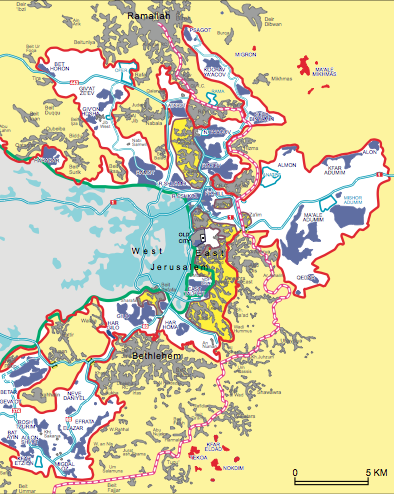
Now that full-scale building has resumed in the West Bank, and land in East Jerusalem housing 30 Palestinian families has been handed over to Jewish settlers by the State of Israel, the “peace process” hangs in a delicate balance. Yet the very nature of such a process was created as tenuous by definition.

The Palestinian Authority has taken a stand against popular Palestinian sentiment to continue with talks despite continued land evictions, settler violence, and state terror. Now they are being set up for humiliation. Israeli Foreign Minister Avigdor Lieberman addressed the United Nations yesterday, calling for an interim peace process that would “take a few decades” and involve a population transfer of Arab Israelis to Palestinian Authority control. These statements were not even contradicted by the Prime Minister’s office, and private sources say Netanyahu does not even necessarily disagree with such a proposal. Now Mahmoud Abbas and Barack Obama are standing like fools on stage with their hands out, while Israel brushes by as if they do not even exist.

The emotional problems are first and foremost the utter lack of confidence between the sides and issues such as Jerusalem, recognition of Israel as the nation-state of the Jewish People and refugees. Under these conditions, we should focus on coming up with a long-term intermediate agreement, something that could take a few decades. We need to raise an entire new generation that will have mutual trust and will not be influenced by incitement and extremist messages.

With this statement, Lieberman says plainly that the world must wait for a tamer, more passive Palestinian generation to emerge before a peace agreement can be worked out. Citing “emotional problems” (that sounds quite like a man shouting “hysteria!” at an enraged woman), he fails to bring up any mention of Jewish extremism – such as the celebrations marking the end of the building freeze attended by thousands in the West Bank – and whether it presents an obstacle to peace.

As for an “exchange of populated territories”, what he means is jettisoning most of the 1.4 million Palestinian citizens in Israel to become the responsibility of the Palestinian Authority, without their say in the matter. In exchange for this process, which would be ridding Israel of what they call a “demographic time-bomb”, Israel would be keeping hold of their Jewish settler population in the West Bank that currently carves up the land into a hellish archipelago – and, one assumes, the military presence there to “protect” the settlers. Win-win.

We can tell who the powerful party is by noticing who sets the rules, who keeps watch over the “emotional” landscape of the peace process. Even Barack Obama, who tried his hand to halt the Israelis from resuming full-scale settlement and colonization of the West Bank, faces humiliation at the hands of the Israeli leaders who take two billion dollars a year in aid with one hand while slapping him with the other.

Unfortunately, the Palestinians are simply window dressing – like the humiliation of Joe Biden earlier in the year when he visited Israel, the real story is about the Israeli right flexing its muscles publicly while America watches, unable to stop them or even speak up in a meaningful way. Meanwhile, the Palestinians continue to be forced off their land, continue to be imprisoned, and even their Israeli-passport-holding brothers and sisters are suddenly pale as their government – to whom they pay taxes and to whom they entrust the education of their children – talks about expelling them without even consulting them first.

The Palestinians are stuck with peace talks. They understand that the way the narrative is written, they will be laid with the guilt if the peace process fails. If they simply show up, try and put on a smile and extend a hand, the Israelis will slap it away and heap shame on their heads until they can’t stand it anymore. Yet, the alternative is nearly unthinkable as anti-PA activists continue to be imprisoned and tortured, as the PA continues to stifle protests against the peace process, etc. All for a sweet slice of foreign money and a world of humiliating defeats.

Palestinian aid culture

Say you’re going to Palestine and nearly everyone will vault their eyebrows at you. To most it’s a big deal, and they see flashes of media segments with stone throwing, tear gas, and bulldozers. The truth on the ground is much different. Traveling through Palestine as an international, you won’t find trouble unless you go looking for it. While difficulties due to the occupation are day-to-day realities, the kinds of oppression institutionalized here are less likely to make the 11 ‘o clock news.

Realities like checkpoints, road bypasses, dust, education, medical services, ID cards, permits, and visas are less likely to get the donors’ juices flowing. Blights like checkpoints and the wall affect people every day and for the long term. Walk through a checkpoint and tell me it wasn’t one of the most disturbing things you’ve done in your life. It won’t make the news like a clash in East Jerusalem, but it will deeply change your ideas about life in Palestine.

Political freedom is another issue, and because of the situation here it is difficult to fund grassroots initiatives without stipulating some clear baseline standards. USAID, for instance, conditions their money to those who work with, are approved by, and operate under the control of the Palestinian Authority. Organizations seeking to create broad appeal and be accessible to the entire population of Palestine will be excluded from funding.

Why is it that the Western mindset must be swayed by photos of gore and violence to commit their efforts? It’s possible one of the main reasons is that our attention span won’t commit the time necessary to understand the deeper, more complex issues that stem from conflict and post-conflict zones. When the killing is over, so is our interest. Therefore, those who want access to international support must tailor their proposals to appeal to such a soundbite mindset. Abroad, donors believe the situation is violent and are sadly ignorant to the deeper challenges.

Who is able or willing to confront the challenges of the civil society sector in such places? Can we discuss bureaucracy and corruption in such a situation?  Can we have a discussion on the horrors of pornography and its impact in such a difficult society? Can we look at the conflict through a lens of colonial theory – or must we restrict ourselves to “development” terminology to ensure funding?

Ask any Palestinian NGO what the greatest challenge facing them is, and they will immediately tell you that the dependence on foreign aid is the biggest. Organizations must have access to financial auditors, English-speakers to write reports, and must play ball with government authorities to ensure access to funds. “I used to spend three days in the field and three days in the office,” one director told me. “Now I spend almost seven days a week in the office trying to keep the money coming.”

Meanwhile, a flock of internationals descends to direct development efforts on the ground. Since they are the donors, they are able to completely tailor the development process to their own international standards, spreading western values, processes, and procedures and demanding respect for them as the gateway to foreign money. Stuck between a rock (PA) and a hard place (Int. interests), Palestinian NGOs can only lie and juggle, taking them out of the field and into the office.

have fun in ramallah or die in gaza

There is another article is out about Ramallah, this time in the Jerusalem Post. Entitled “Palestine’s New Bride”, we glimpse a view of the thumping nightlife of Orjwan, value real estate prices, and a new Swedish luxury hotel. What kind of child thinks these are valid, positive economic indicators and not instead revealing of a class crisis in Palestine? After all, unemployment remains up to 40% in some parts of the West Bank, checkpoints are still manned by private security forces and Israeli teenagers, and kids are dragged out of bed in the dead of night without charges. The Jpost article doesn’t mention this, it just talks about how less corrupt the new Palestinian government is to be able to foster this “economic development”.

Surprisingly, it’s the only source I’ve seen so far that offers a perspective so often left out of other write-ups.

“Whether we like it or not, Ramallah has become the real capital of Palestine,” said Munir Hamdan, a local businessman and Fatah operative. “The president and prime minister have their offices here. So do the parliament and all the government ministries.”

Hamdan and other Palestinians accused the Palestinian Authority of “collusion” with Israel in turning Ramallah into the political and financial capital of the Palestinians. The latest project to build a government complex in Ramallah has left many residents here wondering whether their leadership has abandoned the dream to turn Jerusalem into their capital.

“If they are building a new government compound here, that means they have no plans to be based in Jerusalem,” complained Hatem Abdel Kader, a Fatah legislator from Jerusalem. “Unfortunately, the Palestinian government of Salam Fayyad has abandoned Jerusalem in favor of Ramallah.”

Abdel Kader is perhaps one of the few people who know what they are talking about when it comes to Jerusalem. About two years ago Fayyad appointed him as minister for Jerusalem affairs.

However, Abdel Kader resigned a few weeks later, saying he had discovered that his ministry did not even have enough money to buy a desk and a chair for him.

“I have to be honest with you and tell you that we have lost the battle for Jerusalem,” Abdel Kader lamented. “One of the reasons is because the Palestinian government doesn’t really care about Jerusalem.”

Two stark examples for the kids in the villages: Gaza and Ramallah. In Gaza, the government cares about Jerusalem. In Ramallah, the government doesn’t. Examine the differences between the locations. Losing Jerusalem is hardly a material loss – it was lost a long time ago – but losing the hope for Jerusalem indicates a loss of heart, which means Orjwan will be doing good business in the upcoming months. Really, a great investment opportunity for anyone who’s interested.